
WASHINGTON – TheDepartment of Homeland Securityhas been shut down for more than two weeks,jeopardizing airport security, disaster relief, coastline safety and even pay for members of the Secret Service as they guarded the president during theState of the Union.
The Trump administration sent its latest proposal to Senate Democrats to reopen the agency on Feb. 27, but the negotiations between the White House and Capitol Hill have been happening largely behind closed doors.
There's still no end in sightto the funding impasse. Members of both parties have continued talking past each other, at least publicly, in recent days. Patty Murray, the top Democrat on the Senate Appropriations Committee, told reporters Feb. 25 the Trump administration had yet to start negotiating earnestly about demands to reform federal immigration enforcement.
 Another person has been fatally shot by federal law enforcement in Minneapolis, officials said on Jan. 24. The shooting comes just over two weeks after 37-year-old Renee Nicole Good was shot in the head by a federal immigration officer in a residential neighborhood south of downtown. See the scene of a shooting." style="max-width:100%; height:auto; border-radius:6px; margin:10px 0;" loading="lazy" />


Man fatally shot by federal officers in Minneapolis. Photos show the scene
Another personhas been fatally shot by federal law enforcementin Minneapolis, officials said on Jan. 24. The shooting comes just over two weeksafter 37-year-old Renee Nicole Goodwas shot in the head by a federal immigration officer in a residential neighborhood south of downtown. See the scene of a shooting.
Hours later, Senate Majority Leader John Thune, R-South Dakota, contradicted Murray, pointing to the fact that top administration officials and Senate Democrats were trading paper.
"The White House, I think, has been, in good faith, trying to come to the table and work out some of the differences that the Democrats have," he said, "but in ways that don't jeopardize or undermine the ability of our law enforcement officials to do their jobs, and do them in a way that keeps them safe."
It was an indication of how far apart both sides still remain in the shutdown standoff – the third occasion in PresidentDonald Trump's second term during which funding for the 9/11-era Cabinet agency has lapsed.
Lawmakers and administration officials have indicated thousands of employees are working without pay while some critical functions, including at the Federal Emergency Management Agency and Coast Guard, have been scaled back until the shutdown ends. (Immigration enforcement operations have continued as usual.)
Despite those high stakes, the president made sparing mentions of the funding lapse duringhis State of the Union speechon Feb. 24. The lack of attention he brought to the issue underlined just how commonplace shutdowns have become in Washington, especially in the second Trump era.
The longer the situation drags on, the worse it will become. Union leaders for workers at the Transportation Security Administration are already anticipating longer wait times for airline passengers after TSA employees received a fraction of their usual pay on Friday, Feb. 27.
But it doesn't feel like lawmakers are experiencing a critical mass of pressure from their constituents yet to force a deal. And the further away the timeline gets from the fatal shootings of two Minnesotans in January, the more leverage Republicans may sense they have. Washington's attention has already started largely turning away from the politics of immigration enforcement and toward heightened tensions with Iran and Cuba.
Advertisement
Read more:Why travelers should prep for a DHS shutdown with no end in sight
What Democrats want

Weeks ago, Democrats made 10 central demands to the White House.
Afterthe killing of Alex Pretti, Democrats took a stand to push for a ban on mask-wearing for agents, stricter use-of-force standards and body camera requirements. They also want tightened restrictions around what types of warrants authorize federal officials to arrest people and use force to enter residences. And they want to reestablish a longstanding precedent that Immigration and Customs Enforcement, or ICE, won't target so-called "sensitive locations" such as schools, hospitals and churches.
"All they have to do is agree with our simple ideas that every police department, just about, in America, follows," said Senate Minority Leader Chuck Schumer, D-New York, on Feb. 25. "It's plain and simple."
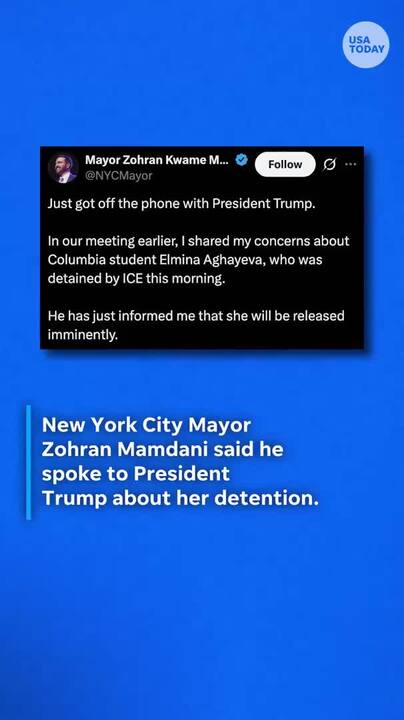
An incident in Schumer's own state a day after he made those remarks may throw a wrench in the negotiations with the White House. According to administrators at Columbia University in New York City, five federal agents misrepresented who they were – falsely saying they were police looking for a missing child – in order to gain access to a residential dorm. Without a warrant, they thendetained a senior named Ellie Aghayevaover concerns about her student visa. She was released later that day after New York City Mayor Zohran Mamdani made a personal appeal to the president.
What Republicans want

Republicans in Congress and the White House are still pushing back on various pieces of Democrats' proposals.
House Speaker Mike Johnsonhas said that appeals for a mask ban and judicial warrant requirements are nonstarters. Face coverings are arguably the biggest sticking point, as Johnson and other GOP lawmakers have said they help prevent federal agents from becoming targets for harassment or threats.
The speaker has, however, indicated an openness to limits on so-called "roving patrols," or random stops of suspicious vehicles, and to bolstering body-worn camera usage. Before the fatal shooting of Pretti by Border Patrol agents upended the bipartisan agreement to fund DHS through the rest of the year, Republicans had already agreed to set aside $20 million for body-worn cameras for immigration enforcement agents.
Schumer's office said Feb. 27 it was closely reviewing the White House's latest counteroffer.
Zachary Schermele is a congressional reporter for USA TODAY. You can reach him by email at zschermele@usatoday.com. Follow him on X at @ZachSchermele and Bluesky at @zachschermele.bsky.social.
This article originally appeared on USA TODAY:Where things stand in the Homeland Security shutdown standoff